Future of U.S. Natural Gas in Global Market
Energy, Natural Gas, LNG
The Future of U.S. Natural Gas in a Changing Global Market
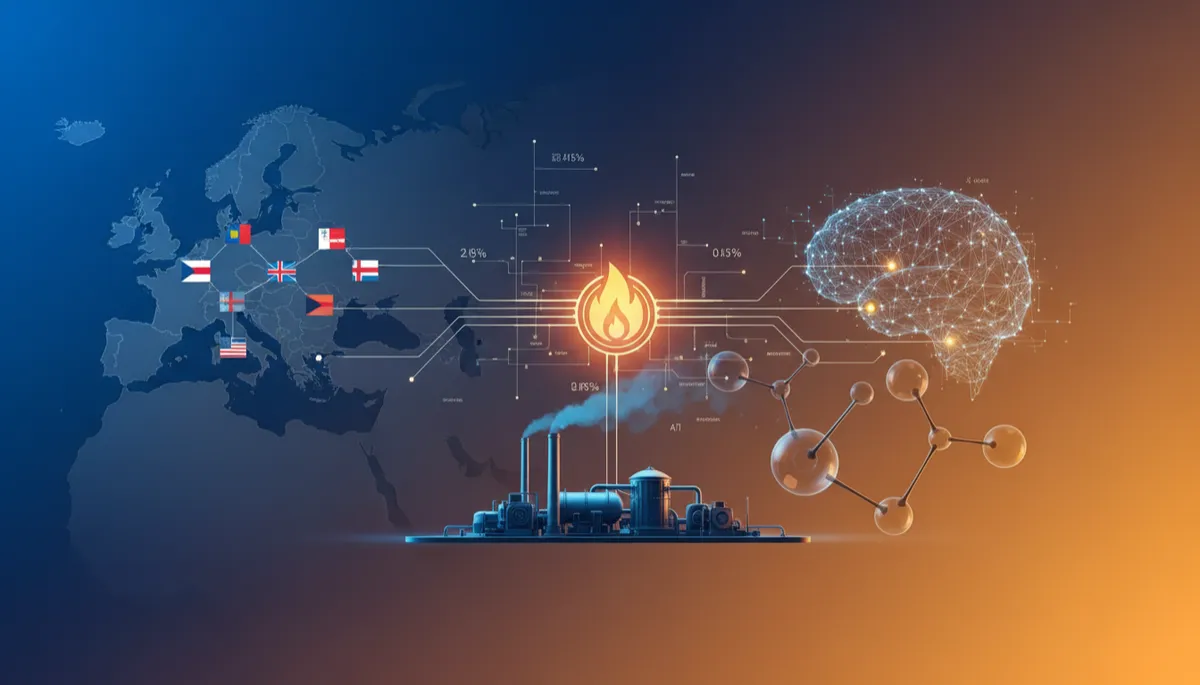
U.S. natural gas is entering a new chapter. Europe is relying heavily on American LNG, AI is reshaping how energy is produced and consumed, and industries are weighing the costs and benefits of converting traditional equipment to LNG. Together, these forces will determine how strong U.S. gas demand remains over the next decade.
U.S. Natural Gas: Strong Exports, Softer Long‑Term Growth
In the near term, the outlook for U.S. natural gas is robust. New export projects such as Corpus Christi Stage 3 and Golden Pass LNG are helping push U.S. LNG exports toward roughly 17 Bcf/d in 2026, with net exports projected near 18.7 Bcf/d and rising further in 2027, according to the U.S. Energy Information Administration (EIA). This export momentum is keeping Henry Hub prices relatively firm in the mid‑$3/MMBtu range, even as domestic production remains strong.
Longer term, however, growth is likely to moderate. As global renewables expand and efficiency improves, the U.S. will rely more on export markets, niche industrial uses, and LNG‑fueled transport to support demand. Natural gas is positioned as a “bridge fuel,” but not an unlimited growth story.
Europe’s Demand: High Reliance Now, Gradual Decline Ahead
Europe has become the centerpiece of U.S. LNG demand. By 2026, the U.S. is expected to supply about two‑thirds of EU LNG imports, with countries like Germany and the Netherlands sourcing more than three‑quarters of their LNG from American terminals, according to IEEFA. Elevated European benchmark prices such as the Dutch TTF—hovering around $16/MMBtu—make U.S. cargoes attractive despite shipping costs.
Yet this dependence comes with a built‑in time limit. The International Energy Agency projects that Europe’s overall gas demand will fall by more than 2% in 2026, and IEEFA forecasts LNG demand could drop about 23% between 2025 and 2030 as renewables and efficiency measures expand. For U.S. producers, that means strong European pull in the 2020s, but a more competitive, potentially oversupplied market later on.

Data centers and LNG conversions may offset some future declines in European gas demand.
AI Demand and the LNG Conversion Wave
Artificial intelligence is a double‑edged sword for natural gas. On one side, AI‑driven data centers are highly energy‑intensive and can support electricity demand in regions where gas‑fired power plants still dominate. On the other, AI tools are making grids smarter and more efficient, helping integrate renewables and reduce wasted fuel. Over time, that efficiency can temper overall gas growth, even if local demand spikes near large computing hubs.
Meanwhile, the conversion of traditional equipment to LNG—especially in shipping, heavy transport, and industry—is creating a new, cleaner demand base. Maritime operators are retrofitting vessels to LNG to meet tighter emissions rules, and industrial sites are installing LNG storage, vaporizers, and new burner systems to cut sulfur and CO2 emissions. These projects require upfront investment and rigorous safety and regulatory planning, but they can lower fuel costs and pollution over the long run.
The Bottom Line for U.S. Natural Gas
Put together, EU demand, AI‑driven power needs, and the shift of traditional equipment to LNG suggest a resilient but evolving future for U.S. natural gas. Exports will remain the key growth engine this decade, while technology and climate policy gradually cap longer‑term upside. For investors, policymakers, and businesses, the message is clear: natural gas still matters, but planning for a more diversified, lower‑carbon energy mix is no longer optional.
